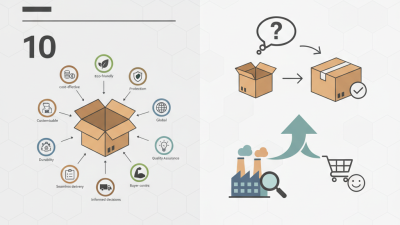
China’s packaging sector serves exporters, retailers, electronics brands, and countless smaller businesses. Choosing a supplier is not just about finding the lowest price. A box must fit the product, survive stacking, and arrive with clean edges and readable print. Small details matter. This guide to China’s top 10 Cardboard Box Packaging manufacturers introduces companies to evaluate for production capability, material options, customization, quality controls, and delivery reliability. It also considers how well a supplier can handle a prototype, revise a dieline, and scale an order without losing consistency.
Packaging educator Walter Soroka, author of Fundamentals of Packaging Technology, is associated with this definition: “Packaging is the science, art, and technology of enclosing or protecting products for distribution, storage, sale, and use.” That principle is useful when comparing manufacturers: a strong carton is both protective and practical. Look for clear specifications, sample testing, and communication that does not leave key details to guesswork. Ask how board grades, flute profiles, printing, and box dimensions are checked before a run begins. A neatly printed sample can still hide a weak seam. No ranking is perfect, either; supplier performance can vary by product, order size, and timing. The profiles ahead offer a starting point, not a substitute for checking samples and confirming requirements directly.
China’s cardboard box packaging industry is shaped by a large paper supply chain, dense manufacturing clusters, and fast-moving domestic distribution. The China Paper Association reported that China produced 129.65 million tonnes of paper and paperboard in 2023, while consumption reached 131.65 million tonnes. These figures cover all paper and paperboard grades, not corrugated boxes alone, but they show the scale of material flows behind box production. For buyers, the practical questions are more specific: board grade, flute profile, compression strength, print quality, and delivery distance.
On a factory floor, these choices become tangible. A heavier board can protect stacked cartons, yet add weight and cost to every shipment. Recycled fiber is widely used, but its performance can vary with furnish and moisture. Small differences matter. The China Paper Association’s annual industry data is useful context, though it does not replace testing a supplier’s finished cartons. Ask for samples and compression-test results under realistic storage conditions. Check how printed boxes perform after humid transport, too. That detail is easy to miss. China’s scale offers many production options, but supplier comparisons can be misleading when specifications, testing methods, or quoted tolerances are not aligned.

A credible ranking of China’s cardboard box packaging manufacturers should measure verified capability, not promotional claims. We assess production capacity, print consistency, material traceability, quality controls, export experience, and delivery reliability. Evidence may include factory audits, sample inspections, test records, and customer references. The Fibre Box Association reported a 93.6% U.S. corrugated recovery rate for 2022, underscoring the sector’s established recycling infrastructure. However, that figure describes recovery in the United States, not the performance of any individual Chinese supplier. Rankings should not confuse industry-wide data with factory-level proof.
Technical checks matter. Buyers can compare box dimensions, flute profiles, compression results, and print registration across repeat orders. Ask for documented testing against recognized packaging standards, and confirm whether records cover the actual production site. A supplier’s stated monthly output is less useful without machine capacity, staffing, and peak-season delivery evidence. No scoring model is perfect; audit access and public data can vary, so rankings should disclose gaps rather than imply certainty.
Tips: Request three recent production samples and compare board thickness, edge quality, and color under the same lighting. Verify certificates directly with the issuing body, and record how each ranking factor is weighted. A tidy sample can still hide uneven batch control.
Ranking methodology: The table below presents a transparent framework for comparing manufacturers; it does not claim to verify or rank any specific companies. The weights are proposed evaluation weights, not measured industry statistics. A company-level ranking requires current, independently checkable evidence for each manufacturer.
| Evaluation criterion | Weight | Evidence to review | Scoring guidance (0–5) |
|---|---|---|---|
| Product range and customization | 15% | Documented availability of corrugated cartons, printed boxes, shipping boxes, and custom dimensions or structures. | Score documented product breadth and customization options; do not infer them from marketing claims alone. |
| Production capability | 15% | Verified equipment, production processes, facility information, and stated capacity with a clear measurement period. | Give higher scores to specific, current, corroborated capability data; treat unsubstantiated capacity claims cautiously. |
| Quality management and testing | 14% | Current quality-system certificates, certificate scope and validity, inspection procedures, and documented packaging tests. | Score the relevance and verifiability of quality evidence, rather than the mere presence of a certificate logo. |
| Material and structural specifications | 12% | Available board grades, flute options, paper specifications, and supporting strength or performance test results. | Reward clear, product-specific specifications and comparable test documentation. |
| Export and order fulfillment | 11% | Documented export experience, shipment or delivery terms, lead-time information, and order-process details. | Score evidence of repeatable fulfillment processes; distinguish stated service areas from proven shipment records. |
| Pricing transparency and value | 10% | Comparable quotations that specify dimensions, materials, print, order quantity, tooling, delivery terms, and quote date. | Compare like-for-like quotations; a low price without matching specifications is not evidence of better value. |
| Environmental documentation | 8% | Specific, verifiable information on recycled content, material sourcing, recyclability, and relevant environmental certifications. | Score claims only when their scope and supporting documentation are clear; avoid treating general green language as proof. |
| Design and pre-production support | 6% | Documented dieline, artwork, sample, prototyping, and approval processes. | Score the clarity and availability of support steps before full production. |
| Customer service and communication | 5% | Documented response channels, inquiry handling, order updates, and issue-resolution procedures. | Use a consistent inquiry or reference-check process rather than relying on isolated testimonials. |
| Business verification and information quality | 4% | Consistency of legal business details, operating address, product information, and independently checkable records. | Give higher scores to current, consistent information that can be corroborated through reliable records. |
| Total proposed weighting | 100% | Apply the same evidence standard and scoring scale to every manufacturer being compared. | |
Scoring method: Rate each criterion from 0 (no verifiable evidence) to 5 (strong, current, independently corroborated evidence). Calculate the weighted score as the criterion weight multiplied by the rating divided by 5, then add the results. Recheck time-sensitive information before publishing any company ranking.
China’s cardboard box manufacturers vary in scale, equipment, and areas of expertise. One profile focuses on high-volume corrugated cartons for everyday shipping. Another serves smaller brands with flexible order quantities. A third emphasizes heavy-duty boxes for machinery parts, using thicker board and reinforced corners. Some manufacturers specialize in printed retail packaging, while others prioritize plain, practical transport cartons. Their strengths differ.
Among the remaining profiles, some offer custom die-cut inserts for fragile goods. Others operate near major production hubs, which may shorten delivery routes for nearby buyers. Several combine design support with sampling, helping teams check dimensions before full production. A few concentrate on recycled-content materials or lightweight structures. The final profiles stand out for responsive service, export-ready packaging, or reliable repeat orders. These are useful distinctions, but a polished catalogue does not prove consistent factory performance.
Tips: Ask for a physical sample and confirm board grade, flute type, box dimensions, and print tolerances. Request a recent production example. Check how the supplier handles defects and changing order volumes. Small details matter, and I would not choose on price alone.
Typical flute heights vary by grade and supplier. Bars show the midpoint of commonly cited industry ranges: A (4.5–5.0 mm), B (2.5–3.0 mm), C (3.5–4.0 mm), E (1.2–1.5 mm), and F (0.6–0.8 mm). These are general material specifications, not company-specific measurements or a manufacturer ranking.
China’s top cardboard box manufacturers differ less by catalog size than by what their plants can reliably deliver. Compare single-wall and double-wall board, custom die-cutting, print quality, and minimum order quantities. A supplier with several flute profiles can protect a heavy appliance differently from a small cosmetics carton. Ask for board specifications, sample boxes, and compression-test results—not just glossy product photos.
Production capacity matters only when it matches your order pattern. Check monthly output, machinery width, color-printing limits, and backup capacity during seasonal peaks. Market reach also needs close inspection: request delivery coverage, export packing details, and realistic lead times for your destination. FEFCO’s European Database reported about 49.8 billion square metres of corrugated board production in Europe in 2022, illustrating the scale of this packaging sector. It does not prove that any individual factory can meet a specific deadline. No scorecard captures every weakness.
Tips: Send the same product dimensions and shipping requirements to each candidate. Compare quotes on equal board strength and print coverage. Ask who handles quality checks at each production stage. A low unit price can hide costly setup fees or inconsistent batches. Samples help, but one sample is not a production record. Request evidence from repeat orders, and leave room for a little skepticism.
Choosing a cardboard box manufacturer starts with the job the box must do. Share the product’s weight, dimensions, stacking conditions, and delivery route. A box for lightweight garments needs different protection from one carrying glass jars. Ask which board grade and flute profile the manufacturer recommends, and why. A clear explanation matters more than impressive technical language.
Request a production sample before approving a large order. Check that the product fits without excessive movement, and inspect folded seams, print alignment, and closing flaps. If boxes will be stacked, discuss compression testing under realistic storage conditions. Also ask how the manufacturer handles changes in paper supply or print color. Samples can hide inconsistencies. A second batch may feel different.
Price is only one part of the decision. Compare minimum order quantities, setup charges, lead times, and how defects are recorded and resolved. Ask for recent quality records and a named contact for production questions. Communication should be specific: dates, tolerances, and corrective steps in writing. A very low quote can look like a clear win; sometimes it leaves little room for stable materials or careful checks. Be willing to question your own assumptions, too. A familiar specification may not suit a new product or shipping route.