China’s box-making industry is expanding, but its supply chain is not simple. Box Paper can mean kraftliner, testliner, fluting medium, or folding boxboard. Each grade serves a different purpose, from shipping cartons to printed food packaging.
Industry data supports this broader view. The China Paper Association’s recent annual statistics show China remains the world’s largest paper and paperboard producer and consumer. Smithers’ packaging outlook also identifies e-commerce, food delivery, and sustainable fiber demand as major growth drivers. These trends explain why manufacturers are investing in recycled-content lines, stronger lightweight grades, and modern coating equipment. A typical production line may convert recovered cartons into testliner, while another mill produces bright coated board for retail packaging. The difference is visible in basis weight, surface smoothness, compression strength, and moisture resistance.
This article examines ten leading Box Paper manufacturers in China through practical selection criteria. These include production capacity, product range, export experience, technical certifications, mill integration, and reported financial performance. Public annual reports, company disclosures, industry databases, and independent market research provide the main evidence. However, rankings should not be treated as permanent. Capacity figures may change after expansions, acquisitions, or mill upgrades. Some private companies also disclose limited operating data, which makes direct comparison imperfect. That limitation deserves attention.
A reliable supplier is not always the largest one. Buyers should verify sample quality, GSM consistency, edge crush performance, delivery records, and environmental documentation. Factory audits still matter. The following manufacturers are therefore presented as influential market participants, not as an unquestionable final ranking.
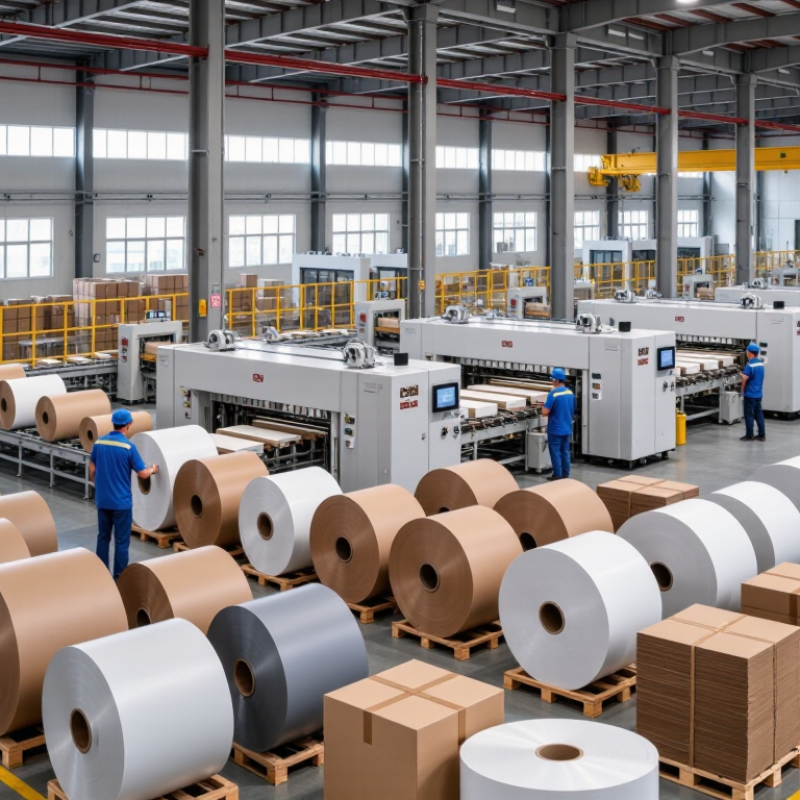
A leading box paper manufacturer in China is defined by measurable consistency, not production size. Experienced buyers examine grammage, moisture, caliper, and burst strength across repeated batches. A reliable mill shares test reports and retains samples from each production lot. Small details matter. Rolls should arrive with firm cores, clean edges, and readable labels. Uneven winding can create stoppages on a high-speed corrugator. Good suppliers discuss these risks before quoting a price.
Technical capability separates serious manufacturers from ordinary traders. They should control fiber preparation, refining, coating, drying, and slitting through documented procedures. Quality teams need calibrated instruments and clear acceptance limits. Ask how they handle a failed moisture reading or damaged pallet. The answer should include root-cause analysis, corrective action, and verifiable follow-up. Environmental management, responsible fiber sourcing, and wastewater controls also require evidence. Compliance records should match the actual factory.
When comparing the top ten manufacturers, include a factory visit, trial order, and converter feedback. Compare printability, folding performance, dust levels, and storage behavior after humid transit. No factory is perfect. A mature supplier admits limitations and explains them clearly. This honesty can be more valuable than a low first quotation. Brochures alone are not enough. Long-term reliability comes from transparent data, responsive communication, and stable performance under real operating conditions.
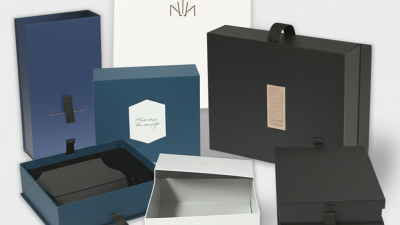
Choosing the top 10 Chinese box paper manufacturers requires more than comparing website claims. A reliable selection begins with product capability, production scale, and documented quality control. Review paper grades, basis weight, burst strength, moisture resistance, and printability. Factory experience also matters, especially for corrugated boxes, folding cartons, and heavy-duty packaging. Recent export records, testing reports, and stable delivery history provide stronger evidence than promotional language.
Independent verification is essential. Check whether the factory operates its own paper machines, controls recycled fiber inputs, and maintains traceable batch records. Request samples from different production dates. Compare surface smoothness, edge strength, color consistency, and performance after storage. Supplier assessments should also consider environmental management, worker safety, technical support, and communication speed. These details help separate dependable producers from traders presenting themselves as manufacturers. However, no shortlist is perfect. Market data changes, and some factories disclose limited information. That limitation should be stated clearly.
Tips: Build a scoring sheet before contacting suppliers. Give practical weight to quality consistency, testing transparency, capacity, lead time, and complaint handling. Ask for a video audit or an in-person visit when order value justifies it. Confirm payment terms and shipping documents in writing. Do not select the lowest quotation automatically. A cheaper roll may create waste, machine stoppages, or failed packaging tests. Recheck supplier information every year, because equipment, management, and export capability can change.
China’s box paper sector is large, regional, and increasingly technical. The China Paper Association reported more than 130 million tonnes of paper and paperboard output in 2023. Smithers’ corrugated packaging research also identifies e-commerce, lightweighting, and fiber recovery as major market drivers. These trends shape the following profiles.
Profile one: An eastern producer focused on high-strength kraftliner and automated quality control. Profile two: A coastal mill supplying recycled testliner for export cartons. Profile three: A central manufacturer known for stable flute paper and competitive energy use. Profile four: A northern producer integrating recovered fiber and wastewater treatment. Profile five: A large integrated mill serving appliance and electronics packaging. Profile six: A southern supplier specializing in moisture-resistant grades for humid logistics. Profile seven: A regional factory offering short runs and customized basis weights. Profile eight: A high-capacity producer investing in lighter papers without reducing compression strength. Profile nine: A mill with strong domestic distribution and fast delivery. Profile ten: A newer facility using digital inspection and cleaner production systems.
These profiles reflect common market positions, not an official ranking. Public capacity figures can differ between annual reports, company disclosures, and government records. That matters. Buyers should verify machine width, annual output, recycled content, and certification scope directly. In practical sourcing, a smooth reel, consistent moisture, and clean edge often matter more than impressive brochures. The China Paper Association and international packaging studies provide useful benchmarks, but they cannot replace mill audits, sample testing, and shipment records. Some mills appear highly competitive until freight, rejected rolls, or seasonal downtime are included. That is where careful judgment remains necessary.
| Rank | Anonymous Manufacturer Profile | Primary Production Region | Reported Founding Year | Main Box-Paper Grades | Typical Basis Weight | Estimated Annual Capacity Range | Fiber Position | Key Market Strength | Export Reach |
|---|---|---|---|---|---|---|---|---|---|
| 1 | Manufacturer Profile A | Guangdong and Sichuan | 1995 | Testliner, kraftliner, corrugating medium, coated white-top liner | 90–250 gsm | 10–20 million tonnes | Large recycled-fiber base with integrated pulp assets | High-volume packaging and containerboard supply | Asia-Pacific and selected global markets |
| 2 | Manufacturer Profile B | Guangdong and Jiangsu | 1994 | Kraftliner, testliner, fluting medium and specialty packaging paper | 80–250 gsm | 5–10 million tonnes | Recycled fiber supported by virgin-fiber grades | Integrated paper and corrugated-packaging operations | East Asia, Southeast Asia and other export markets |
| 3 | Manufacturer Profile C | Anhui and Zhejiang | 1957 | White-top liner, testliner, kraftliner and corrugating medium | 90–220 gsm | 3–6 million tonnes | Mixed recycled and virgin-fiber sourcing | High-strength papers for consumer-goods packaging | Primarily domestic with selected overseas sales |
| 4 | Manufacturer Profile D | Zhejiang | 1996 | Testliner, fluting medium, white-top liner and lightweight containerboard | 70–200 gsm | 2–4 million tonnes | Predominantly recovered paper | Flexible grades for e-commerce and general cartons | Domestic China with regional exports |
| 5 | Manufacturer Profile E | Shandong | 1993 | Kraftliner, sack kraft, containerboard and corrugating medium | 80–250 gsm | 2–4 million tonnes | Integrated virgin pulp and recycled fiber | Strong performance grades for industrial packaging | Asia, Europe and other selected markets |
| 6 | Manufacturer Profile F | Shandong | 1994 | Testliner, fluting medium, white-top liner and coated packaging paper | 80–220 gsm | 2–3 million tonnes | High recycled-fiber utilization | Food, beverage and retail carton applications | Domestic distribution and nearby Asian markets |
| 7 | Manufacturer Profile G | Guangxi and Guangdong | 1958 | Kraftliner, sack paper, linerboard and specialty industrial paper | 70–250 gsm | 1–3 million tonnes | Virgin-fiber and integrated pulp capability | Regional supply for heavy-duty and industrial cartons | South China and Southeast Asia |
| 8 | Manufacturer Profile H | Jiangsu and Zhejiang | 1985 | Testliner, fluting medium, recycled kraft and lightweight linerboard | 70–180 gsm | 1–2 million tonnes | Recycled-fiber focused | Lightweight packaging and cost-efficient carton conversion | Mainly domestic China |
| 9 | Manufacturer Profile I | Fujian and Jiangxi | 1989 | Kraftliner, testliner, corrugating medium and food-grade packaging paper | 80–220 gsm | 1–2 million tonnes | Mixed-fiber sourcing with growing recycled content | Regional carton producers and food-packaging customers | China and selected Southeast Asian markets |
| 10 | Manufacturer Profile J | Hubei and Henan | 1970 | Testliner, fluting medium, recycled kraft and specialty box paper | 70–200 gsm | 0.8–1.5 million tonnes | Primarily recovered paper with regional fiber procurement | Central China supply and standard corrugated-box grades | Mostly domestic, with limited regional exports |
Note: Capacity figures are presented as practical public-market ranges for box-paper operations; rankings may vary according to the measurement period, product scope and whether affiliated mills are consolidated.
China’s leading box paper manufacturers compete through products, production capacity, and market strength. The top ten typically supply kraftliner, testliner, corrugating medium, coated board, and specialty papers. China Paper Association data reported national paper and paperboard output at about 141 million tonnes in 2023. That scale creates strong domestic supply, but capacity alone does not prove reliability.
Smithers estimates the global corrugated packaging market exceeded US$200 billion in 2024. Chinese producers therefore compete on more than volume. The strongest factories operate large, automated machines, integrated pulp systems, and regional warehouses. Their practical advantage is shorter delivery time.
Some mills can adjust grammage quickly for appliance cartons, export cases, and e-commerce packaging. Others focus on lightweight paper, where strength must survive stacking and humidity.
Consistency matters most.
Production audits should examine moisture variation, burst strength, ring crush, and recycled-fibre quality. Independent laboratory testing and ISO-based quality systems provide useful evidence, though certificates cannot replace factory visits. Market strength also depends on energy efficiency, recovered-paper access, port connections, and export experience. A high-capacity mill may still perform poorly during maintenance or raw-material shortages. That is an uncomfortable limitation. Buyers should compare annual output, operating rates, product yield, and verified delivery records, rather than trusting impressive capacity figures. Data from industry reports offers direction, but current customer references reveal the manufacturer’s real performance.
Choosing among the top 10 box paper manufacturers in China requires more than comparing prices. Start with your box specifications, including paper grade, basis weight, moisture resistance, and required strength. Kraftliner suits demanding shipments, while testliner may reduce costs for lighter cartons. Ask each manufacturer for recent test reports, production capacity, and clear quality standards. Reliable suppliers can explain burst strength, Cobb value, and edge crush performance without vague promises.
Tips: Request samples from at least three factories. Test them with your actual carton design and filling weight. Inspect the paper surface, reel edges, moisture level, and color consistency. Ask for factory photos, machine details, export experience, and traceable raw-material records. Confirm minimum order quantities, lead times, pallet protection, and response procedures for damaged rolls. A written specification prevents many disputes.
I once trusted an attractive sample too quickly. It performed well indoors but softened during humid storage. That mistake changed my evaluation process. Now, I recommend testing paper through transport simulation and warehouse conditions. Check whether the supplier can maintain stable quality across several batches, not only one perfect shipment. Certificates can support credibility, but they should match verifiable production practices. Communication also matters. A technically strong factory may still be unsuitable if it answers slowly or avoids corrective action. A careful audit, realistic trial order, and measurable acceptance criteria create a safer choice.