How to Choose the Right Candy Box for Your Business
Choosing the right Candy Box is a business decision, not just a design exercise. It affects product protection, shelf appeal, shipping costs, and how customers remember your brand. A box that looks beautiful but lets truffles shift during delivery may disappoint. A sturdy box that feels plain may miss a chance to make a gift feel special. The right choice balances both.
Industrial designer Raymond Loewy is often associated with this principle: “Between two products equal in price, function and quality, the better-looking will outsell the other.” His observation offers a useful lens for packaging decisions. Still, appearance alone cannot carry the job. Consider what you sell, how many pieces each box holds, and whether the sweets need separate compartments. Picture a customer opening the lid and finding neat rows, no crushed corners, and a clear ingredient label. Small details matter.
Start with the real use case. A neighborhood chocolatier may need compact boxes for a counter display, while an online candy business may need stronger board and protective inserts. Compare materials, dimensions, closure styles, print quality, and minimum order quantities. Ask for a sample and test it with the actual candy. It may reveal an awkward fit. That is useful, even if the first design felt perfect on screen. No box suits every product or budget. A thoughtful choice gives your candy protection, presentation, and a more consistent customer experience.
Define Your Business Needs and Candy Packaging Goals
Before choosing a candy box, define what it must protect, hold, and communicate. List the candy types, piece count, and expected handling conditions. A box for delicate truffles may need fitted inserts, while wrapped hard candies can often sit securely in a simpler tray. Measure the product, including any cups or liners, rather than guessing from its appearance. Small details matter. Also note whether boxes will be shipped, displayed on a counter, or handed directly to customers. Each setting creates different demands for strength, access, and presentation.
Set clear packaging goals that fit your business. Decide whether easy assembly, a premium feel, low material use, or a specific price matters most. These goals can conflict: thicker board may improve protection but raise costs and storage needs. Check minimum order quantities and available production time before settling on a design. Then test a sample with the actual candy. Tilt it, stack it, and open it after transport. A mock-up may look neat on a screen and still leave sweets rattling inside. It is easy to overlook that. Record what failed, adjust the dimensions or insert, and test again before placing a larger order.
Compare Candy Box Types, Materials, and Structures
A candy box should protect the product, suit the sales channel, and make the contents easy to present. Folding paperboard cartons work well for small retail assortments and stack neatly on shelves. Rigid boxes add structure for premium gifts, but use more material and storage space. Corrugated boxes are better suited to shipping larger orders. For delicate pieces, a fitted insert can limit movement; a clear window helps customers see the assortment, though it may reduce protection from light.
Material and structure matter as much as appearance. Paperboard is easy to print and shape, while corrugated board cushions products in transit. Flexible pouches can suit individually wrapped or smaller candies, but may not create the same gift-ready feel. The Flexible Packaging Association’s 2023 State of the Flexible Packaging Industry report estimated U.S. flexible-packaging sales at $42.9 billion in 2022. That figure shows the format’s scale, not that it suits every candy. Check barrier needs against the product: chocolate can soften in heat, and sticky sweets may need a reliable inner wrap. A beautiful box can still fail if the pieces rattle inside.
Tips: Match the structure to the candy’s weight and fragility. Test a filled sample through stacking and delivery before ordering at scale. Check that any food-contact liner is specified for its intended use. Small detail, big difference. One trade-off is easy to miss: extra inserts improve presentation but can slow packing. The right choice may take a few practical trials.
Choose Box Size and Protection for Your Products
Choose a candy box by measuring the finished product, not just its recipe or label. Include wrappers, paper cups, and dividers that take up space. A box that looks roomy when empty may press truffles once its lid closes. Leave modest clearance around each piece, while keeping candies from sliding during delivery. Test the fit with actual samples. Small differences matter.
Match protection to the candy’s shape and texture. Firm caramels may need simple dividers, while dipped chocolates benefit from individual cavities that limit contact. For shipping, check that the lid stays closed and corners resist gentle pressure. Add a liner or cushioning if temperature changes or movement could damage the finish. Too much padding can also crowd the product, so check before ordering a full run. I’ve found that packaging choices can look right on paper, then feel awkward in hand.
Tips: Pack a sample box, close it, and gently tilt it from side to side. Look for scuffs, shifted pieces, and lid pressure. If the contents still move, adjust the insert or box size. A quick test is useful, though it cannot mimic every delivery route.
Plan Branding, Labeling, and Regulatory Requirements
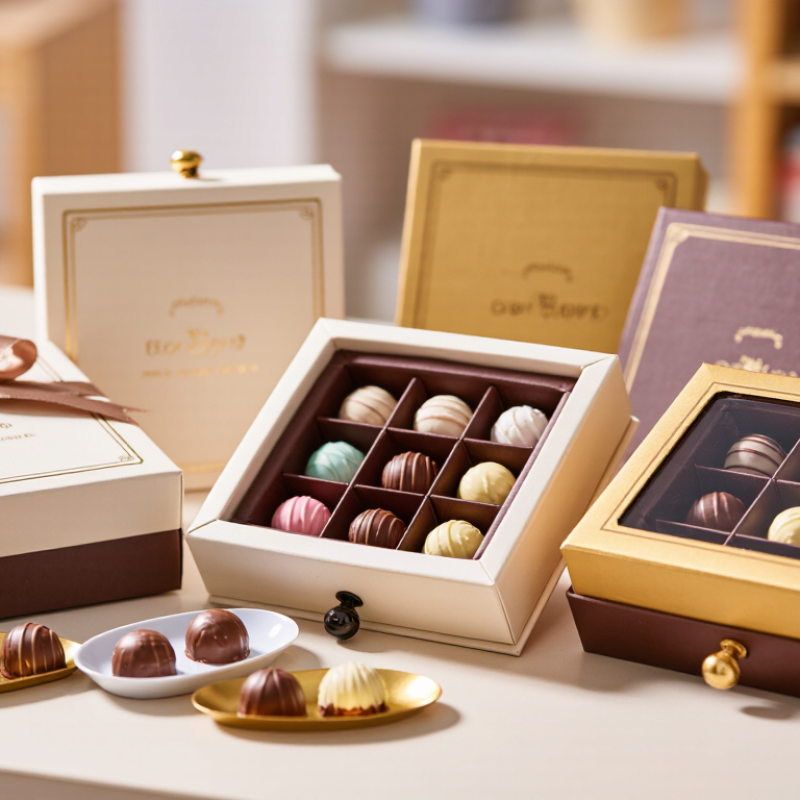
A candy box is part of the product experience, but it also carries practical information. Choose colors, type, and illustrations that match your audience and the occasion. A slim drawer box may suit gift assortments, while a sturdy tuck-top carton can protect pieces during delivery. Check how the package feels in hand. Small details matter.
Keep branding readable at the actual box size. A logo that looks clear on a screen may disappear beside a product name or flavor label. Use a simple hierarchy: product type, flavor, and key buying details should be easy to find. Leave enough unprinted space for required information and batch codes. More decoration is not always better.
Before printing, confirm which labeling rules apply where the candy will be sold. Requirements can vary by location and product, so check with the relevant regulator or a qualified labeling professional. Depending on the market, packaging may need ingredients, allergen disclosures, net quantity, business details, or date information. Make sure claims such as “natural” or “sugar-free” are accurate and permitted for your product. One easy-to-miss issue is tiny text; a label can be technically present yet difficult to read. Order a small test run, inspect it under shop lighting, and revise anything that feels crowded. You may not get it perfect on the first try.
Evaluate Costs, Suppliers, and Packaging Sustainability
A candy box can look inexpensive on a quote and still cost more after shipping, setup, and storage. Compare the landed cost per usable box, not the unit price alone. Include printing setup, inserts, freight, and damaged cartons in your estimate. Ask suppliers to confirm minimum order quantities and price breaks in writing. Small batches help test demand. Frequent reorders may cost more.
Supplier reliability shows up in details: sample color, crease strength, fit, and lead times. Request a physical sample packed with your actual sweets, then check whether dividers shift or corners crush during handling. Ask how defects are measured and what happens when a shipment misses agreed specifications. A polished sample is not proof of repeatable production. That risk is easy to underestimate.
For sustainability, start by right-sizing the box. Empty space often means extra board and more freight volume. Compare recycled or responsibly sourced paperboard with coatings, windows, and laminates that may complicate local recycling. Ask suppliers for material specifications and evidence behind environmental claims, not just a leaf symbol on a product sheet. Test protection, too; a recyclable box that lets chocolates scuff in transit can create avoidable waste. Trade-offs are real.
How to Choose the Right Candy Box for Your Business
Evaluate costs, suppliers, and packaging sustainability. Recycling rates offer one useful material-screening benchmark—but they do not replace checking local recycling rules or comparing supplier quotes.
In 2018, U.S. recycling rates varied considerably by packaging material. Paper and paperboard had the highest rate shown. These national estimates are a sustainability reference, not a guarantee that a specific candy box is recyclable in your area. Source: U.S. Environmental Protection Agency, 2018 materials management data.