Choosing the right Box Paper manufacturer in China requires more than comparing prices on a supplier platform. Global buyers must examine material quality, production consistency, export experience, and communication standards. A reliable factory should explain its paper grades clearly, including kraft, coated, recycled, and food-contact options where applicable. It should also provide sample boxes, test reports, factory details, and realistic production timelines.
Small details matter. Check the paper surface under direct light. Feel whether the edges remain firm after folding. Ask how moisture, color variation, and compression strength are controlled. Experienced manufacturers usually discuss these points without avoiding difficult questions. They may support custom sizes, printing, laminating, and structural design, but every claim still needs verification.
Do not trust polished photographs alone. Request recent samples.
This guide introduces leading Box Paper manufacturers in China for international buyers. It focuses on practical supplier evaluation, quality assurance, customization ability, minimum order quantities, and shipping coordination. It also considers responsible sourcing and applicable packaging requirements in destination markets. Certifications can strengthen confidence, but certification names should be checked independently and matched with the actual product.
Some buyers focus too heavily on the lowest quotation. That choice can create hidden costs through weak cartons, delayed delivery, or repeated sampling. Yet higher prices do not automatically guarantee better performance. The better approach combines evidence, communication, and careful testing. No supplier is perfect, and even a promising factory may need closer review. This article aims to provide a balanced starting point for buyers seeking dependable Chinese partners and practical Box Paper solutions.
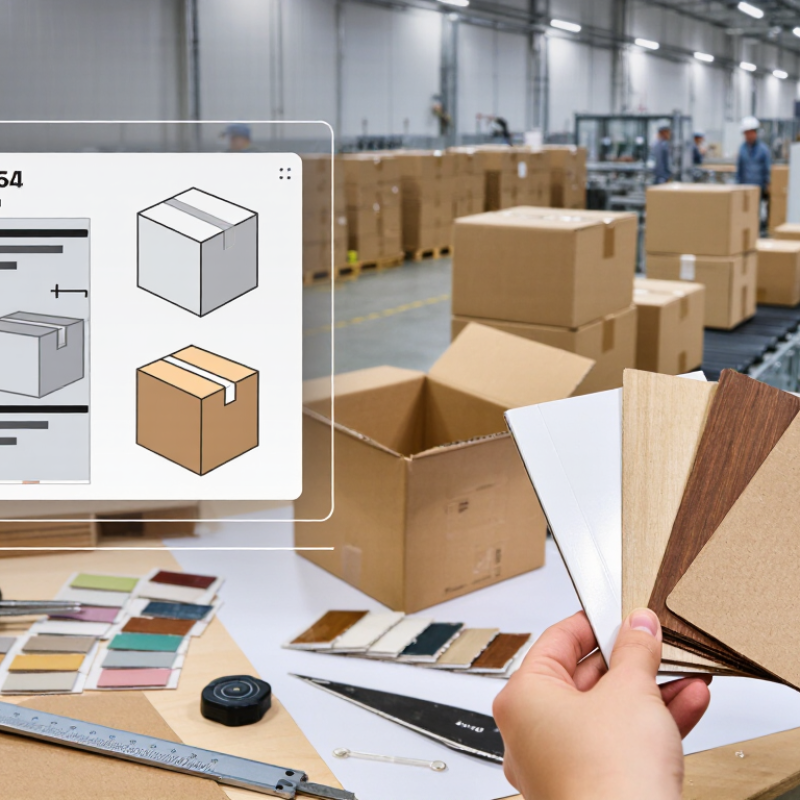
China’s box paper industry includes several manufacturer types, each suited to different packaging needs. Integrated paper mills produce kraft liner, test liner, and corrugated medium from pulp or recovered fiber. They usually offer stable supply, large production capacity, and consistent basis weight. Their products work well for shipping cartons, retail boxes, and industrial packaging.
Specialty paper manufacturers focus on coated, white-top, moisture-resistant, or high-strength grades. These suppliers can adjust surface smoothness, color, stiffness, and printing performance. Converting factories buy base paper and add coatings, laminations, or custom finishes. They suit buyers needing smaller batches or detailed box designs.
Recycled paper manufacturers are another practical option. They often provide kraft paper with visible fibers, warm brown tones, and environmental documentation. However, recycled content can affect strength and appearance. Samples may look better than bulk production, which deserves careful checking.
Tips: Ask for GSM, bursting strength, edge crush test, moisture range, and roll width. Request production samples from the same machine used for your order. Review factory audit records, test reports, and export experience before signing. A video tour helps, but it is not full proof. I once trusted a clean sample too quickly; the delivered paper had uneven edges. Independent inspection can prevent that mistake. Confirm packaging, loading methods, lead time, and compensation terms in writing.
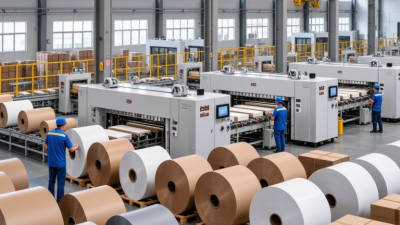
China’s box-paper supply chain is concentrated in three practical manufacturing hubs. The Yangtze River Delta, including Jiangsu and Zhejiang, offers strong paper mills, automated converting lines, and efficient export logistics. Guangdong’s Pearl River Delta is known for fast sampling, printed cartons, and flexible production for consumer goods. Shandong and Fujian provide competitive kraft paper capacity, especially for larger-volume orders.
According to China Paper Association data, China’s paper and paperboard output exceeded 140 million tonnes in 2023. This scale supports stable sourcing, but capacity alone does not guarantee consistent boxes. Smithers’ global packaging research also forecasts continued growth in corrugated packaging through 2028, increasing pressure on suppliers to improve automation, lightweighting, and material efficiency. Buyers should request recent mill certificates, moisture records, compression-test results, and batch samples before approving production.
Capabilities differ sharply between factories. Some suppliers control pulping, paper-making, printing, die-cutting, and assembly. Others outsource key stages, which can create color or strength variation. I have found that clear tolerance sheets reduce disputes more effectively than attractive catalogs. A low quote can still be a weak deal. Buyers should compare edge-crush strength, bursting resistance, flatness, lead time, and pallet protection. ISO 9001 systems and responsible-forestry certifications add useful evidence, but they should be verified against the actual production site. Supplier claims are not proof.
Global buyers should evaluate box paper manufacturers through documented controls, not polished factory photographs. Request kraft liner or corrugated medium samples from several production batches. Compare GSM, moisture, bursting strength, Cobb value, and edge crush performance. Use the same test method for every supplier. Small differences become serious problems during humid ocean shipping. Ask whether paper quality changes between trial orders and regular production.
Production records should show raw material sources, machine settings, inspection points, and batch traceability. Request current FSC chain-of-custody documents when responsible forestry claims matter. ISO 9001 can indicate a structured quality system, while ISO 14001 may support environmental management claims. However, certificates must match the factory’s legal entity, site, and product scope. Verify the issuing body and expiry date. Food-contact requirements need separate evidence and should never be assumed from general paper certifications.
Tips: Ask for recent laboratory reports, calibration records, and a live production video. Check whether the report identifies the exact paper grade. A perfect sample can still hide inconsistent production. I would treat early quotations as provisional until repeat samples perform similarly. Visit the mill when possible, or appoint an independent auditor. Look for clean storage, covered reels, controlled humidity, and workers recording defects instead of quietly removing them. Suppliers may resist detailed questions; that response is useful evidence too.
Best Box Paper Manufacturers in China for Global Buyers
Custom design should begin with the product, not a decorative template. Experienced Chinese manufacturers usually provide CAD dielines, 3D mock-ups, and physical prototypes. Ask for compression tests and drop tests. A beautiful sample can still fail during ocean freight.
The Smithers 2024 market outlook estimates the global paper-based packaging market will exceed US$500 billion by 2028. This growth increases material choices, but also creates confusion. Kraft liner suits natural finishes and moderate strength. White-top kraft supports sharper printing. E-flute adds protection without making the carton bulky. FEFCO’s 2023 statistics recorded about 48 billion square metres of European corrugated output, showing the scale of standardized box production.
Minimum orders often start near 500 to 1,000 pieces for simple stock sizes. Complex rigid boxes may require 1,000 to 3,000 units. These figures vary. Printing plates, foil dies, magnetic closures, and special inserts can raise the minimum. Request a line-by-line quotation. It should separate board, printing, finishing, sampling, packing, and freight. Pricing depends heavily on box dimensions because wasted sheet space increases quickly. I have seen buyers choose the cheapest offer, then pay more for weak cartons and replacements. That mistake is easy to repeat. Ask for material certificates, production photos, inspection records, and a pre-shipment sample before approving bulk production.
Best Box Paper Manufacturers in China for Global Buyers
Reliable export service begins with clear product specifications. Define paper grade, GSM, moisture resistance, burst strength, sheet size, and monthly volume. Ask manufacturers for recent laboratory reports and production samples. Photos are useful, but physical samples reveal curling, weak edges, and uneven coating. Small flaws matter.
Export experience should include accurate commercial invoices, packing lists, certificates of origin, and shipment tracking. Confirm the agreed Incoterm before production starts. A supplier should explain whether cargo moves through a nearby seaport, inland depot, or bonded warehouse. Request carton dimensions, pallet patterns, and loading photographs. These details help buyers estimate freight and reduce damage risks. Delays happen.
Buyer selection should balance price, consistency, communication, and recovery plans. Compare at least three factories using the same specification sheet. Check whether the manufacturer can maintain the requested GSM across repeated batches. Ask how they handle rejected rolls, wet cargo, late loading, or color differences. A written corrective-action process is more valuable than confident promises.
Payment terms also deserve careful review. Use staged payments linked to production and inspection milestones where appropriate. Verify the supplier’s legal registration and export history through reliable business records. Some factories offer excellent prices but weak documentation. That gap can create customs delays and unexpected storage fees. A cheaper quotation is not always cheaper after arrival.
| Evaluation Category | Buyer-Focused Metric | Typical Planning Data | Why It Matters | Recommended Verification | Priority |
|---|---|---|---|---|---|
| Product Capability | Paperboard and corrugated grades | Test liner, kraft liner, fluting medium, coated paperboard, and specialty grades | The selected grade affects compression strength, print quality, moisture resistance, weight, and total packaging cost. | Request technical data sheets, basis weight, thickness, moisture data, and applicable testing standards. | High |
| Product Capability | Common paper grammage | Approximately 80–400 g/m², depending on the paper or board grade | Grammage influences stiffness, bursting performance, box weight, and freight calculations. | Confirm the permitted tolerance and test method rather than relying only on nominal grammage. | High |
| Customization | Printing and surface finishing | Flexographic, offset-laminated, water-based coating, varnish, and die-cut options may be available | Finishing requirements affect appearance, food-contact suitability, production complexity, and minimum order quantity. | Approve a pre-production sample and specify color references, coating type, and artwork tolerances. | High |
| Order Planning | Minimum order quantity | Often quoted by size, material, printing method, and production batch; no universal industry minimum | A low unit price may not be economical if the required order exceeds the buyer’s storage or sales volume. | Obtain a written MOQ for each SKU, including setup charges, plate charges, and mixed-item rules. | High |
| Order Planning | Production lead time | Common planning range: 15–45 days after artwork approval, deposit, and material confirmation | Lead time affects inventory levels, launch schedules, and the need for expedited transport. | Separate material procurement, sampling, production, inspection, and dispatch time in the quotation. | High |
| Quality Control | Strength and dimensional testing | ECT, burst strength, flat crush, moisture, thickness, GSM, dimensions, and print inspection | Testing helps ensure that boxes remain functional during stacking, handling, and transportation. | Define an inspection plan, sampling level, acceptable defect limits, and test reports before production. | High |
| Quality Control | Pre-shipment inspection timing | Usually performed when production is substantially complete and packing is available for inspection | Inspection before shipment reduces the risk of receiving incorrect quantities, dimensions, or print results. | Check product dimensions, count, workmanship, packaging, labeling, and carton marks against the purchase order. | High |
| Export Services | Commercial export documentation | Commercial invoice, packing list, bill of lading or sea waybill, and certificate of origin when required | Accurate documents support customs clearance, payment processing, cargo release, and tariff assessment. | Ask for draft documents before shipment and ensure consignee, HS classification, quantity, and weight are consistent. | High |
| Export Services | Trade terms | EXW, FOB, CFR, CIF, FCA, and DAP are commonly discussed; responsibilities differ under each term | The trade term determines who arranges transport, insurance, export clearance, and delivery risk. | Use the current Incoterms rules and name the exact port, terminal, or delivery location in the contract. | High |
| Logistics | Main transport mode | Ocean freight is generally used for larger shipments; air freight is faster but significantly more expensive | The best mode depends on shipment volume, delivery deadline, product value, and inventory urgency. | Compare a full-container quotation with consolidated freight and include origin, destination, documentation, and handling charges. | High |
| Logistics | Standard container planning capacity | Approximate internal volume: 33 m³ for a 20-foot dry container and 67 m³ for a 40-foot dry container | Actual loading capacity depends on carton dimensions, palletization, stacking limits, and maximum gross weight. | Request a loading plan showing carton count, pallet count, cubic meters, gross weight, and remaining capacity. | High |
| Logistics | Typical ocean transit planning | Often about 20–45 days port-to-port, depending on route, carrier schedule, transshipment, and congestion | Transit time is separate from factory production, export handling, customs clearance, and inland delivery. | Build a delivery schedule using a realistic buffer and confirm the planned sailing date after booking. | High |
| Packaging | Export packing requirements | Strong outer cartons, moisture protection, corner protection, pallet wrapping, and clear shipping marks | Paper products can be damaged by compression, humidity, abrasion, and unsuitable stacking during transit. | Approve packing specifications covering pallet size, carton limits, wrapping materials, labels, and container loading. | High |
| Compliance | Food-contact or product-safety requirements | Requirements vary by destination market, intended use, coatings, inks, adhesives, and recycled content | Packaging used for food or sensitive products may require specific declarations, migration testing, or restricted-substance controls. | Provide the destination-country requirements and request relevant material declarations and laboratory reports. | High |
| Sustainability | Recycled content and recyclability | Must be confirmed by grade, fiber source, coating, adhesive, ink, and destination-market rules | Environmental claims should be supported by traceable evidence and should not be inferred from appearance alone. | Request recycled-content statements, fiber-source information, applicable certifications, and claim substantiation. | Medium |
| Commercial Terms | Payment structure | Common arrangements include a deposit before production and balance before shipment; terms are negotiable | Payment timing influences cash flow and the buyer’s exposure before quality approval and shipment. | Link payment milestones to approved samples, production completion, inspection, and final shipping documents. | High |
| Supplier Selection | Factory verification | Review legal entity information, production site, equipment, capacity, export history, and quality procedures | Verification helps distinguish a direct manufacturer from a trading intermediary and reduces supply continuity risk. | Use a video or on-site audit, check sample consistency, and confirm that the contracting party matches the payment beneficiary. | High |
| Supplier Selection | Total landed-cost comparison | Product price + tooling + inland charges + freight + insurance + duties + customs fees + destination delivery | The lowest factory quotation is not necessarily the lowest delivered cost. | Compare suppliers using the same specification, quantity, trade term, destination, packaging, and delivery assumptions. | High |
| After-Sales Support | Claim and corrective-action process | Written procedure should define evidence, response time, replacement, credit, rework, and freight responsibility | A documented process makes quality disputes easier to resolve and protects future supply continuity. | Include defect definitions, notification deadlines, root-cause analysis, and corrective-action requirements in the contract. | Medium |
| Planning note: Figures shown are general procurement benchmarks for international box-paper sourcing. Actual specifications, pricing, lead times, freight schedules, customs requirements, and supplier capabilities must be confirmed in writing for each order and destination market. | |||||