Leave Your Message

10 Best Boxes For Clothes Storage And Shipping?

Choosing the right boxes for clothes can protect garments, simplify moving, and reduce shipping problems. A weak box may collapse under winter coats, while an oversized carton can leave delicate fabric sliding inside. This guide examines the 10 best Boxes For Clothes for storage and shipping, with practical details that matter beyond appearance.

The selection considers box strength, dimensions, lid design, ventilation, stackability, and ease of carrying. It also looks at wardrobe boxes, standard moving cartons, plastic containers, and specialty shipping boxes. Each option serves a different need. A narrow box may suit folded shirts, but it will not comfortably hold thick sweaters. A garment box with a hanging bar can prevent creases, although it usually costs more and requires extra storage space.

Real-world handling often reveals flaws that product descriptions overlook. Corners can soften in humid rooms. Tape may loosen during long transport. Some containers feel sturdy but become awkward when fully loaded. That detail is easy to miss. The guide therefore focuses on usable capacity, material quality, and packing behavior, not just advertised measurements. It also explains when acid-free tissue, moisture protection, or reinforced tape may be worthwhile for valuable clothing. No box solves every storage challenge. Choosing too quickly can create unnecessary damage or expense. Use these comparisons as a practical starting point, then match each box to the fabric, weight, destination, and storage period.
10 Best Boxes For Clothes Storage And Shipping?

What Makes a Box Suitable for Clothing Storage and Shipping

A suitable clothing box must protect fabric without creating unnecessary bulk. For shipping, corrugated board with a strong edge crush rating helps resist compression during stacking. The U.S. Environmental Protection Agency reported 82.2 million tons of containers and packaging waste in 2018. That figure makes right-sizing more than a cost decision.

Fit matters. Too much empty space lets garments shift and wrinkle. Too little space can crush collars, buttons, or folded seams. Choose internal dimensions slightly larger than the folded clothing, then add clean tissue or recycled paper. Avoid loose plastic fillers around delicate textiles. The box should close flat, with strong seams and a moisture-resistant surface. Clothing stored for months also needs ventilation control, because damp fibers can develop odor or mildew.

Shipping adds harsher risks. The global parcel network handled about 161.8 billion parcels in 2022, according to the Pitney Bowes Parcel Shipping Index. Boxes face drops, vibration, and pressure. Test filled samples using procedures aligned with ISTA or ASTM distribution standards. A practical check is simple: shake the sealed box, inspect the corners, and weigh it before dispatch. That test is useful, but not perfect. Real warehouses behave differently. For storage, prioritize stable stacking, readable labels, and acid-free contact materials when garments are valuable. A cheaper box may work briefly, yet fail after repeated handling.


Key Features to Compare When Choosing Clothing Boxes

The best clothing box balances protection, fit, handling, and material efficiency. Start with internal dimensions. A box that leaves five centimeters of empty space invites shifting, creasing, and wasted filler. A tight fit can crush collars or damage folded knitwear. Measure the garment stack, then allow modest clearance for tissue or a moisture barrier.

Board strength matters during storage and shipping. The 2023 Global Parcel Shipping Index recorded 161.1 billion parcels worldwide in 2022, showing how often packages face sorting, stacking, and vibration. Choose corrugated board with a suitable edge-crush rating, especially for heavy coats or multiple garments. Reinforced seams and reliable closures reduce accidental openings. Test a sample with a short drop and compression check. It may fail.

Moisture resistance deserves attention in humid warehouses or rainy delivery routes. However, excessive plastic coating can complicate recycling. The U.S. Environmental Protection Agency reported 82.2 million tons of containers and packaging generated in 2018, with approximately 53.9 million tons recovered. Select recyclable paper-based materials when protection remains adequate. Add clear size labels, folding guidance, and a return-friendly opening. A reusable box sounds ideal, but weak corners can make reuse unrealistic. Total cost should include damage, storage space, labor, and disposal—not only the purchase price.

The 10 Best Box Types for Different Clothing Storage Needs

Choosing the right box depends on the clothing, storage period, and handling conditions. After packing seasonal wardrobes and preparing garments for shipping, I have found that box shape matters more than appearance. A poor fit creates wrinkles, wasted space, or crushed corners.

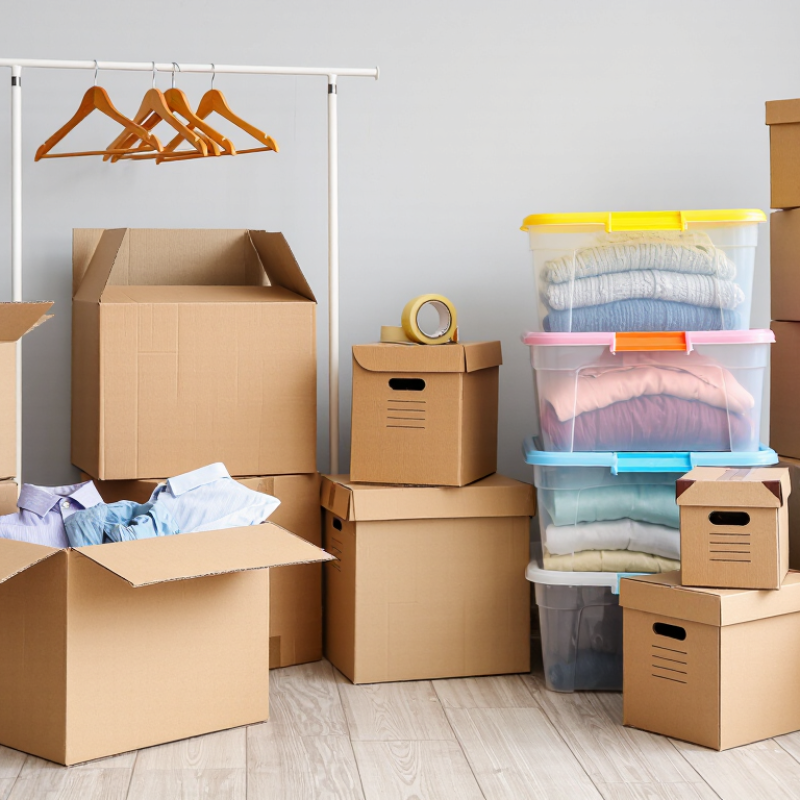
For folded shirts and everyday clothes, use standard corrugated cartons. Sweaters need medium-depth wardrobe boxes with stronger walls. Long coats fit best in tall garment boxes with a hanging bar. Shoes work well in small compartment boxes. Delicate dresses benefit from flat, acid-free apparel boxes and tissue paper. Vacuum-storage cartons suit bulky bedding, but compressed fabrics should breathe after unpacking. Plastic lidded boxes protect children’s clothes from dust and moisture. Under-bed boxes save space for seasonal items. Archive boxes are useful for clean, dry keepsakes. For shipping, double-wall cartons offer better impact resistance. They cost more. Sometimes that is worth it.

Tips: Match the box to the fabric, not only the quantity. Keep heavier items at the bottom, and leave a small air gap around delicate garments. Label each box with size, season, and handling notes. Test one packed box before storing many. I once overfilled a carton with denim, and its base bowed within days. That mistake changed my packing method. Avoid damp garages and direct sunlight. For long-term storage, inspect garments every few months, because even careful packing cannot fix hidden moisture.

10 Best Boxes For Clothes Storage And Shipping

Comparison of representative box types by typical usable capacity. Volumes are calculated from commonly used internal dimensions; actual sizes may vary by manufacturer and design.

How to use this chart: Smaller cartons and mailer boxes are practical for folded clothing and parcel shipping, while wardrobe boxes, plastic totes, and under-bed containers provide more capacity for long-term storage. Vacuum bags are shown as a compact clothing-storage option rather than a rigid box.

How to Pack Clothes Safely in Storage and Shipping Boxes

How to Pack Clothes Safely in Storage and Shipping Boxes

Choosing the right box matters when storing or shipping clothes. Use clean, dry, medium-sized boxes with sturdy walls. Oversized boxes encourage overpacking and can crush folded garments. I once filled a large box too heavily, and its bottom weakened during lifting. That mistake changed my packing routine.

Wash and dry every garment before packing. Even slight moisture can create unpleasant odors or mildew inside a closed box. Fold shirts and trousers evenly, then place heavier items at the bottom. Wrap delicate fabrics in acid-free tissue or clean cotton sheets. Avoid plastic bags for long-term storage unless they allow ventilation. Leave a little space, but not enough for clothes to shift sharply during transit. Add a simple inventory card with item names and packing dates. This helps prevent unnecessary unpacking.

Tips: Test the box before filling it. Press the bottom gently and inspect the seams. Reinforce them with strong packing tape in an H-shaped pattern. Keep each box comfortable to lift. If it feels too heavy, remove several garments. Use moisture-resistant wrapping for humid storage areas, but check the clothes periodically. I still sometimes fold items too tightly, especially bulky sweaters. Looser folds protect their shape better. Label the top and two sides with clear handling details, while keeping personal information limited.

Labeling, Storing, and Reusing Clothing Boxes Efficiently

When I pack seasonal clothes, I label each box before sealing it. Use a large, readable label on two sides. Write the category, size range, and storage season. Add the packing date and a short item count. Small details matter. A clear label prevents unnecessary unpacking and protects delicate fabrics from repeated handling.

Store boxes in a cool, dry room, away from leaking pipes and direct sunlight. Keep them on shelves or a raised platform, not directly on the floor. Fold clothes loosely, and avoid filling boxes until they bulge. Cotton garments need airflow, while wool benefits from clean paper wrapping. Never store damp clothing, even briefly. Moisture can create odors, stains, and mildew.

I once trusted a faded label and opened four boxes to find one sweater. That mistake changed my system. Before reusing a clothing box, inspect its corners, bottom, and inner surface. Remove old labels and cross out outdated details completely. Reinforce weak seams with strong packing tape, especially for shipping. Use a fresh label with the destination, contents, and handling note. Avoid sending boxes with torn handles or crushed edges. Recycling is useful, but a damaged box may not protect clothing during transport. A quick inspection takes less than a minute. My system is better now, though I still occasionally misplace the marker.

10 Best Boxes For Clothes Storage And Shipping? - Labeling, Storing, and Reusing Clothing Boxes Efficiently

Rank Box Type Typical Inside Dimensions Approx. Volume Best For Estimated Clothing Capacity Labeling Method Storage and Reuse Advantages
1 Small Corrugated Shipping Box 12 × 10 × 8 in 0.56 cu. ft. Folded shirts, children’s clothing, accessories, and small shipments Approximately 10–15 folded garments Write on the top panel or apply a removable label Easy to stack, light to carry, and suitable for repeated short-distance shipping
2 Medium Moving Box 18 × 14 × 12 in 1.75 cu. ft. General household clothing and seasonal garments Approximately 25–35 folded garments Use large removable labels on two adjacent sides Balanced size-to-strength ratio; can be flattened and reused for future moves
3 Large Corrugated Storage Box 24 × 18 × 18 in 4.50 cu. ft. Bulky sweaters, coats, bedding, and low-density clothing Approximately 40–60 folded garments Use a contents label plus a seasonal date High capacity, but should not be overfilled or stacked too high
4 Wardrobe Box with Hanging Bar 24 × 20 × 48 in 13.33 cu. ft. Suits, dresses, coats, uniforms, and wrinkle-sensitive clothing Approximately 20–30 hanging garments Place a category label at eye level on the front panel Prevents creasing and reduces folding; less efficient for compact stacking
5 Flat Garment Storage Box 24 × 16 × 6 in 1.33 cu. ft. Under-bed storage, linens, denim, and folded seasonal clothing Approximately 15–25 folded garments Use a top-facing label for quick identification Fits low-clearance spaces and stacks neatly without excessive height
6 Plastic Lidded Clothing Tote 26 × 17 × 14 in 3.58 cu. ft. Long-term storage in basements, closets, garages, and attics Approximately 30–45 folded garments Use a clipped card, sleeve label, or erasable marker Resists moisture and can be washed and reused many times; not ideal for parcel shipping
7 File-Style Clothing Box 15 × 12 × 10 in 1.04 cu. ft. Baby clothes, accessories, scarves, and small clothing categories Approximately 15–25 folded garments Use an end-panel label that remains visible on a shelf Compact footprint makes sorting easy and supports modular shelf storage
8 Flat-Rate-Style Shipping Box 12 × 12 × 5.5 in 0.46 cu. ft. Small clothing orders, scarves, lightweight tops, and returns Approximately 8–14 folded garments Apply the shipping label to the largest flat surface Space-efficient for shipping; easy to repurpose as a drawer or shelf organizer
9 Heavy-Duty Double-Wall Box 20 × 16 × 16 in 2.96 cu. ft. Dense denim, footwear, uniforms, and interstate shipping Approximately 30–45 garments, depending on weight Use reinforced labels on two sides and mark the weight-sensitive contents Extra corrugated layers improve stacking strength and protect contents during transit
10 Small Garment Gift Box 12 × 9 × 4 in 0.25 cu. ft. One or two shirts, baby outfits, accessories, and neatly presented clothing gifts Approximately 4–8 folded garments Use a small front label or write directly on a removable card Attractive for presentation and useful later for accessories or keepsakes
Practical note: Clothing capacity is an estimate based on loosely folded garments. Actual capacity varies with fabric thickness, packing method, box strength, and whether protective bags or packing paper are used. For long-term storage, keep clothing clean and completely dry, avoid overfilling, and label at least two visible sides of each box.